







Mga Spotlight
Medical Product Designer, Biomedical Device Designer, Healthcare Device Designer, Medical Equipment Designer, Health Technology Designer, Clinical Device Designer, Medical Device Engineer, Medical Device Development Specialist, Healthcare Innovation Designer, Medical Device Design Engineer
If you’ve ever used a thermometer, insulin pump, hospital monitor, or even a simple bandage, you’ve already experienced the work of a Health and Medical Device Designer.
These professionals are responsible for creating and improving the tools, machines, and devices used in healthcare settings to diagnose, treat, and monitor patients. Their work sits at the intersection of engineering, medicine, and design—making sure medical devices are not only functional and accurate, but also safe, comfortable, and easy for both patients and healthcare workers to use.
Before a medical device ever reaches a hospital or clinic, it goes through a long process of research, testing, and redesign. Health and Medical Device Designers work closely with doctors, nurses, engineers, and researchers to understand real clinical needs. They sketch concepts, build prototypes, run simulations, and test devices under strict safety standards. Every detail matters—from how a device fits in a surgeon’s hand to how clearly it displays patient data.
They also ensure that designs meet regulatory requirements set by health authorities such as the FDA or other medical agencies. A single design flaw could affect patient safety, so precision, problem-solving, and responsibility are essential in this field.
Ultimately, their work helps bring life-saving innovations from ideas to reality, improving the quality of care for patients around the world.
- Creating medical devices that directly improve or save lives
- Working on innovative technology used in hospitals and clinics
- Collaborating with healthcare professionals and engineers on real-world problems
- Seeing your designs move from concept to real, functioning medical equipment
- Contributing to safer, more effective, and more accessible healthcare solutions
Iskedyul ng Paggawa
Health and Medical Device Designers typically work full-time in office, laboratory, or engineering environments. Depending on the company and project phase, they may also collaborate remotely with engineering teams, hospitals, or research institutions. Work schedules can become extended during product testing, prototype development, or regulatory submission deadlines, especially when preparing for clinical trials or approval processes.
Karaniwang mga Tungkulin
- Collaborate with biomedical engineers, doctors, nurses, and researchers to identify clinical needs for medical devices
- Design medical equipment such as monitoring systems, diagnostic tools, wearable health devices, or surgical instruments
- Create sketches, digital models, and prototypes using CAD (Computer-Aided Design) software and simulation tools
- Test device usability, safety, and performance through simulations, lab testing, and user feedback from healthcare professionals
- Ensure designs meet strict medical regulations and standards set by agencies such as the FDA or equivalent health authorities
- Analyze feedback from clinical trials or testing phases and revise designs for improvement
- Work with manufacturing teams to ensure devices can be safely and efficiently produced at scale
- Evaluate patient safety, ergonomics, and human factors to ensure devices are comfortable and easy to use
- Document design processes, testing results, and technical specifications for regulatory approval
Mga Karagdagang Responsibilidad
- Train or guide junior designers, interns, or engineering assistants in design tools and medical device standards
- Collaborate on research and development projects to explore new healthcare technologies and innovations
- Present design concepts and prototypes to stakeholders, healthcare professionals, and regulatory reviewers
- Stay updated on advancements in biomedical engineering, healthcare technology, and digital health tools
- Support compliance with safety regulations, ethical standards, and quality assurance protocols
- Contribute to continuous improvement of existing medical devices and healthcare systems
Imagine walking into work knowing that the device you help create could one day save a life, help a patient recover faster, or make a doctor's job easier. A Health and Medical Device Designer often starts the day meeting with healthcare professionals, engineers, and researchers to learn about challenges faced in hospitals, clinics, or home healthcare settings. Maybe nurses need a monitor that is easier to read during emergencies, or patients need a wearable device that is more comfortable to use every day. These real-world problems become the starting point for new ideas.
The rest of the day is a mix of creativity and problem-solving. Designers sketch concepts, create 3D computer models, and build prototypes to see how their ideas work in practice. They may test devices, gather feedback from healthcare professionals, and make improvements to ensure the product is safe, effective, and easy to use. Some days are spent in laboratories or workshops, while others involve collaborating with teams to review research and safety standards. Every project is different, but the goal is always the same: designing technology that helps people stay healthier and receive better medical care.
Mga Malambot na Kasanayan
- Kakayahang umangkop
- Pag-iisip na analitikal
- Pansin sa detalye
- Kolaborasyon at pagtutulungan
- Creativity and innovation
- Kritikal na pag-iisip
- Pagkausyoso
- Empathy for patients and healthcare professionals
- Etikal na paghatol
- Mga kasanayan sa pakikipag-ugnayan at komunikasyon
- Kakayahang lumutas ng problema
- Pamamahala ng proyekto
- Pamamahala ng oras
Mga Kasanayang Teknikal
- Biomedical engineering principles
- Computer-Aided Design (CAD) software (such as SolidWorks, AutoCAD, and Fusion 360)
- Design prototyping and testing
- Human factors and usability engineering
- Materials science and medical-grade materials
- Medical device development processes
- Medical terminology and healthcare systems
- Product design and manufacturing methods
- Quality assurance and quality control procedures
- Risk assessment and safety testing
- Regulatory standards and compliance requirements (FDA, ISO 13485, and IEC standards)
- Technical documentation and design specifications
User-centered design principles - Working with healthcare professionals, engineers, and regulatory agencies
- Diagnostic Device Designer – Develops equipment used to detect, monitor, and diagnose medical conditions, such as imaging systems and testing devices.
- Surgical Device Designer – Creates instruments and tools used by surgeons during medical procedures to improve precision and patient outcomes.
- Wearable Medical Device Designer – Designs health-monitoring devices that patients can wear, such as fitness trackers, glucose monitors, and heart-rate sensors.
- Rehabilitation Device Designer – Develops products that help patients recover from injuries or illnesses, including prosthetics, orthotics, and mobility aids.
- Assistive Technology Designer – Creates devices that help people with disabilities perform daily activities and improve their quality of life.
- Medical Imaging Device Designer – Works on technologies such as MRI, CT, ultrasound, and X-ray systems used for diagnosing medical conditions.
- Patient Monitoring Device Designer – Designs equipment that tracks vital signs and patient health in hospitals, clinics, and home healthcare settings.
- Digital Health Device Designer – Develops connected medical devices that integrate with software, mobile apps, and telehealth systems to support patient care.
- Mga tagagawa ng aparatong medikal
- Hospitals and healthcare systems
- Biomedical engineering firms
- Pharmaceutical and biotechnology companies
- Research and development laboratories
- Government health agencies
- Universities and academic research institutions
- Healthcare technology companies
- Rehabilitation and assistive technology organizations
- Medical equipment and diagnostics companies
- Digital health and telemedicine startups
- Product design and engineering consulting firms
Being a Health and Medical Device Designer requires a strong commitment to safety, precision, and responsibility. Every design decision can directly affect a patient’s health and a healthcare professional’s ability to deliver care. Designers are expected to follow strict regulations, meet industry standards, and ensure that every device they create is tested thoroughly before it reaches real-world use. Even small design flaws can lead to serious consequences, so attention to detail and careful evaluation are essential at every stage.
In return for this responsibility, they often face long development cycles, repeated testing, and multiple rounds of redesign before a product is approved. Creative ideas may need to be adjusted or simplified to meet safety requirements, cost limits, or manufacturing constraints. However, the reward is meaningful: their work can improve medical treatments, save lives, and make healthcare more effective and accessible for patients around the world.
Health and Medical Device Design is rapidly evolving due to advances in technology and the growing demand for safer, smarter, and more personalized healthcare solutions. One major trend is the use of artificial intelligence (AI), 3D modeling, and simulation tools in the design process. These technologies help designers test devices virtually, predict performance, and improve safety before physical prototypes are even built.
Another important trend is the rise of wearable and connected medical devices, such as smart monitors, fitness trackers, and remote patient monitoring systems. These devices collect real-time health data, allowing doctors and patients to track conditions outside of hospitals. There is also a strong focus on user-centered and human factors design, ensuring that medical devices are simple, comfortable, and easy for both patients and healthcare professionals to use.
At the same time, stricter regulations and higher safety standards are shaping the industry. Designers must carefully follow global medical device regulations while also protecting patient data and ensuring cybersecurity in connected devices. Overall, the field is moving toward more intelligent, patient-focused, and technology-driven healthcare solutions.
People who become Health and Medical Device Designers often enjoyed science, math, and hands-on problem-solving when they were younger. They may have liked building things, taking apart gadgets to see how they work, or doing school projects that involved experiments and design. Many also enjoyed puzzles, drawing, or creative activities that required imagination and logical thinking at the same time.
They often showed curiosity about technology and how machines or medical tools help people in real life. Some were interested in helping others from an early age, whether through science fairs, volunteer work, or simply asking questions about health and how the human body works. At their core, they were usually curious learners who enjoyed combining creativity with problem-solving to understand and improve the world around them.
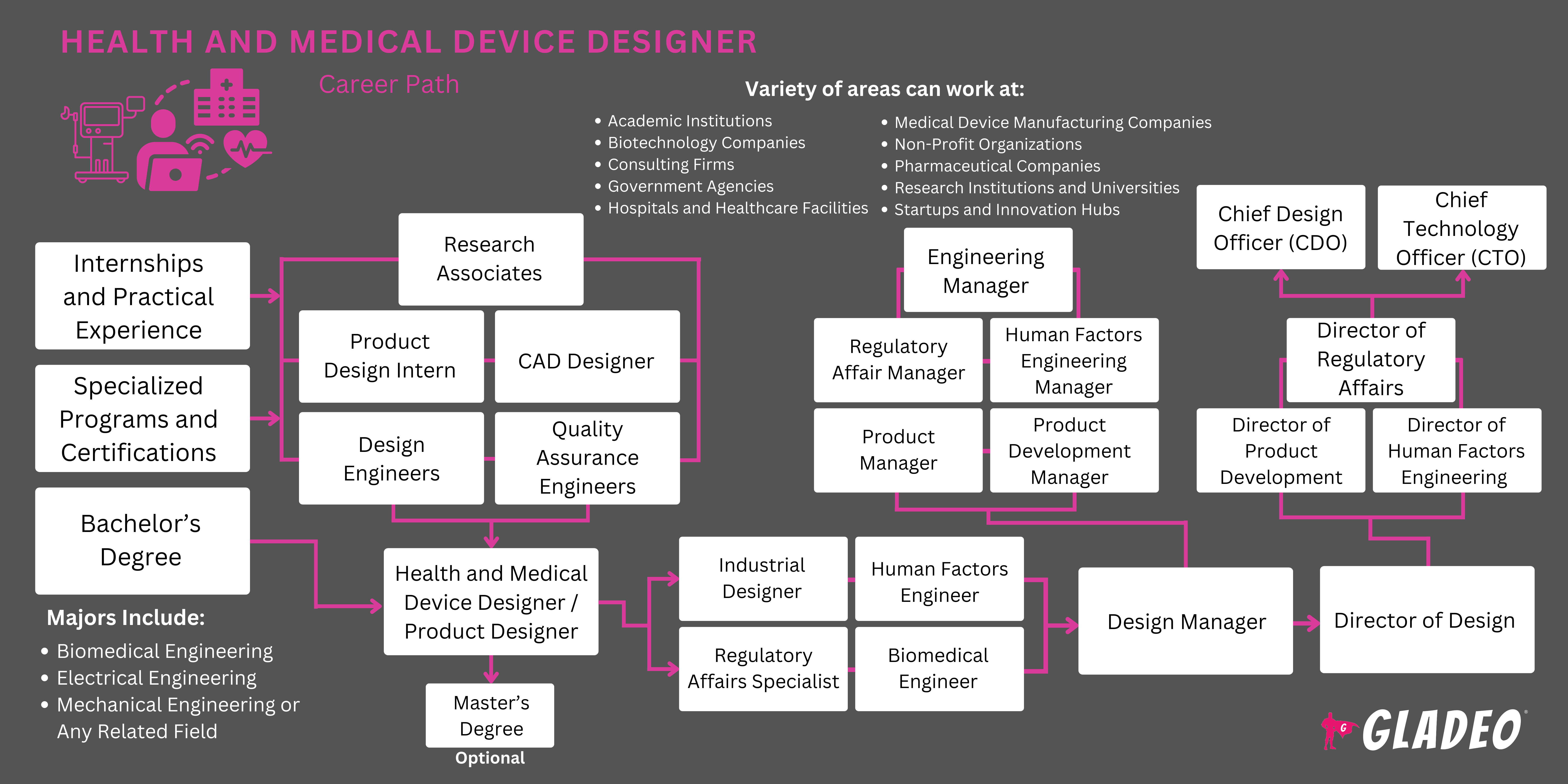
Health and Medical Device Designers typically need a strong background in both engineering and healthcare-related fields. Most employers look for candidates with a bachelor’s degree in biomedical engineering, mechanical engineering, industrial design, product design, or a related discipline. Some may also pursue advanced studies or specialized certifications in medical device design, human factors engineering, or healthcare technology.
Common college course topics may include:
- Biomedical engineering fundamentals
- Anatomiya at pisyolohiya
- Materials science and biomaterials
- Computer-Aided Design (CAD) and 3D modeling
- Product design and prototyping
- Human factors and usability engineering
- Medical device development and innovation
- Engineering mechanics and design principles
- Healthcare systems and clinical environments
- Product testing and quality assurance
- Regulatory affairs and medical device standards (FDA, ISO, IEC)
- Safety engineering and risk management
Many students also gain valuable experience through internships in hospitals, medical device companies, research labs, or engineering firms. Hands-on experience is especially important because it helps future designers understand real patient needs and how medical devices are actually used in clinical settings.
- Health-focused programs such as biomedical engineering, product design, industrial design, or related engineering fields
Strong coursework in science, technology, design, and human-centered innovation - Opportunities for hands-on learning through labs, design studios, and prototype development
- Internship or co-op programs with hospitals, medical device companies, or healthcare technology firms
- Access to modern design tools such as CAD software, 3D printing labs, and simulation technology
- Faculty members with experience in biomedical engineering, healthcare innovation, or product design
- Strong industry partnerships with hospitals, research centers, and medical device manufacturers
- Programs that emphasize both technical engineering skills and user-centered design thinking
- Availability of research opportunities in healthcare technology and medical innovation
- Affordable tuition options, scholarships, and financial aid support
- Flexible study formats such as in-person, online, or hybrid learning options
- Career support services including portfolio development, internships, and job placement assistance
- Strong biomedical engineering, product design, or life sciences department
- Access to modern research labs, prototyping facilities, and testing equipment
- Opportunities for hands-on learning through design projects and undergraduate research
- Courses that combine engineering, healthcare, human factors, and design thinking
- Faculty members with experience in medical devices, healthcare innovation, or industry practice
- Internship or co-op partnerships with hospitals, medical device companies, or health tech firms
- Exposure to real-world healthcare problems and clinical environments
- Training in CAD software, 3D modeling, simulation tools, and prototyping technologies
- Programs that support innovation, such as incubators, accelerators, or startup labs
- Opportunities to develop prototypes, patents, or capstone design projects
- Workshops on regulatory standards, product development, and healthcare safety compliance
- Strong career support services for internships, research placements, and job opportunities
- Build a strong portfolio of design projects, prototypes, CAD models, or school-based medical device concepts
- Gain hands-on experience through internships in hospitals, medical device companies, or biomedical engineering labs
- Participate in university design competitions, innovation challenges, or engineering capstone projects
- Join research labs, incubators, or innovation centers focused on healthcare technology or product design
- Create a professional LinkedIn profile showcasing your technical skills, design projects, and healthcare interests
- Network with biomedical engineers, product designers, and healthcare professionals through events, seminars, and conferences
- Seek mentorship from professionals in medical device design or biomedical engineering
- Apply to entry-level roles such as design assistant, junior product designer, or biomedical engineering intern
- Learn industry tools such as CAD software, 3D modeling platforms, and prototyping technologies
- Understand basic medical device regulations and safety standards (FDA, ISO, IEC)
- Develop strong communication skills to present design ideas clearly to engineers, doctors, and stakeholders
- Be prepared to explain your “design thinking process” and how your ideas solve real healthcare problems
- Communicate your career goals with supervisors, senior designers, or mentors so you can take on higher-level responsibilities such as leading design projects or managing development teams
- Start in entry-level roles like design assistant, junior medical device designer, product development associate, or biomedical engineering technician to build experience and credibility
- Stay updated with emerging technologies in healthcare such as AI-assisted diagnostics, wearable health devices, robotics in surgery, and smart medical systems
- Strengthen your skills in advanced CAD modeling, prototyping, simulation tools, and human-centered design methods
- Learn how to interpret clinical research, user feedback, and regulatory requirements to improve device safety and effectiveness
- Gain experience working through the full product lifecycle—from concept design and prototyping to testing, manufacturing, and regulatory approval
- Develop leadership skills by managing small projects, mentoring interns, or collaborating with cross-functional teams (engineering, healthcare, and manufacturing)
- Build strong professional relationships with engineers, doctors, researchers, and industry experts who can guide your career growth
- Attend industry conferences, workshops, and design innovation events to expand your knowledge and network
- Join professional organizations related to biomedical engineering, medical technology, and product design for access to training and career opportunities
- Continuously improve your communication skills to clearly present design ideas to both technical teams and non-technical stakeholders
- Explore opportunities to specialize in areas such as surgical devices, wearable technology, or diagnostic equipment to advance into senior or lead designer roles
Mga Website:
- FDA (Food and Drug Administration) – Medical device regulations, approval processes, and safety guidelines
- ISO (International Organization for Standardization) – Global standards for medical device quality and safety
- IEEE Xplore – Research papers on biomedical engineering and medical device technology
- PubMed – Scientific studies related to healthcare, medicine, and biomedical innovation
- MedTech Dive – Medical technology industry news and updates
- MassDevice – Medical device industry trends and company developments
- Design News – Engineering and product design insights, including medical devices
- Biomedical Engineering Society (BMES) – Professional resources, events, and research community
- Coursera & edX – Courses in biomedical engineering, product design, CAD, and healthcare innovation
- MIT OpenCourseWare – Engineering, design thinking, and biomedical engineering courses
- GrabCAD – 3D modeling and engineering design community for sharing CAD files
- Autodesk Education Community – Tools and learning resources for CAD and product design
- LinkedIn Learning – Training in CAD software, human factors, and product development
Mga Libro:
- Biodesign: The Process of Innovating Medical Technologies by Paul Yock et al.
- Medical Device Design: Innovation from Concept to Market by Peter J. Ogrodnik
- Ang Disenyo ng mga Pang-araw-araw na Bagay ni Don Norman
- Engineering Design: A Project-Based Introduction by Clive L. Dym et al.
- Medical Device Technologies: A Systems Based Overview Using Engineering Standards by Glen M. Shields
- Human Factors Engineering and Ergonomics in Healthcare by Pascale Carayon
- Design of Medical Devices and Systems by various biomedical engineering authors
Health and Medical Device Designers create innovative tools and technologies that improve patient care, diagnosis, and treatment. But if designing medical devices doesn’t feel like the perfect fit, there are still many related careers where you can use creativity, engineering, and healthcare knowledge. Here are some alternative careers to consider:
- Inhinyero ng Biomedikal
- Inhinyero sa Disenyo ng Produkto
- Clinical Engineer
- Industrial Designer (Healthcare Products)
- Inhinyero ng mga Salik ng Tao
- Medical Device Product Manager
- Quality Assurance Engineer (Medical Devices)
- Espesyalista sa mga Gawaing Regulasyon
- Healthcare Technology Consultant
- Rehabilitation Engineering Specialist
- Research and Development (R&D) Engineer
- Health Technology Innovator
Balita

Mga Itinatampok na Trabaho
Mga Online na Kurso at Kagamitan
Mga Inaasahang Taunang Sweldo
Ang mga bagong manggagawa ay nagsisimula sa humigit-kumulang $98K. Ang median na suweldo ay $119K bawat taon. Ang mga manggagawang may mataas na karanasan ay maaaring kumita ng humigit-kumulang $149K.
Mga Inaasahang Taunang Sweldo
Ang mga bagong manggagawa ay nagsisimula sa humigit-kumulang $92K. Ang median na suweldo ay $101K bawat taon. Ang mga manggagawang may mataas na karanasan ay maaaring kumita ng humigit-kumulang $139K.