






Mga Spotlight
Designer, Floral Artist, Floral Clerk, Floral Department Specialist, Floral Designer, Florist, Wedding Decorator
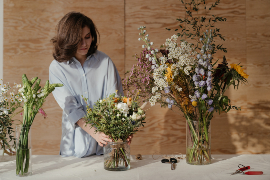
Giving flowers for special occasions is a tradition that dates back to ancient Egyptian culture! Today, we continue to give flowers to express various sentiments ranging from love to condolences. Florists (or Floral Designers, if you prefer) are the proud keepers of this long-standing custom. They source fresh flowers from local farms and wholesalers then carefully select and combine them into colorful decorative arrangements or wrapped bouquets.
As experts in this unique and relatively small field, Florists often help customers decide which flowers are suitable for the given occasion and budget. Many Florists are self-employed, running small local businesses and offering delivery services. Others may work in the floral departments of large retail or grocery stores. Regardless of where they work, Florists are creative, empathetic artists who provide meaningful floral pieces designed to make a difference in the lives of their recipients.
- Getting to spend time peacefully working with flowers and plants
- Having an outlet for creative expression
- Knowing that your work will help make someone feel better
- Potentially getting to own and operate your own small business
Iskedyul ng Paggawa
- Florists may work full or part-time. Those who own a business may put in overtime to ensure there are enough fresh flowers and other inventory on hand, the shop is tidy and visually appealing, the staff is taken care of, delivery vehicles are in good condition, marketing is running smoothly, and accounting is done right. Overtime is also likely required during busy seasons such as Mother’s Day and Valentine’s Day.
Karaniwang mga Tungkulin
- Keep the floral shop or selling area looking clean and professional, and workspaces sanitized and free from clutter
- Tukuyin ang mga kinakailangan sa imbentaryo. Maghanap at bumili ng imbentaryo mula sa mga supplier, wholesaler, at mga lokal na magsasaka
- Create ready-made arrangements and grab-and-go bouquets
- Establish prices and mark items. Ring up sales, including additional items such as cards, balloons, stuffed animals, baskets, vases, etc.
- Assist phone, online, and walk-in customers with custom-made arrangement requirements. Offer suggestions based on budgets, occasions, and desired delivery dates
- Select flowers, greenery, foliage, and containers that complement each other. Create arrangements based on established patterns or design unique concepts
- Trim flowers and other materials as needed to suit the arrangement. Use wire, pins, tape, and other holding materials
- Deliver or establish delivery of arrangements to intended recipients
- Keep flowers refrigerated as needed. Water flowers and plants
- Create window and in-shop displays, including holiday-themed displays
Mga Karagdagang Responsibilidad
- I-offload ang mga papasok na imbentaryo. Subaybayan ang lahat ng stock para malaman kung kailan mag-reorder
- Provide instructions for care (for example, a plant’s sunlight, soil, water, and climate requirements)
- Write messages on cards on behalf of customers who can’t come in person
- Keep up-to-date on design trends and continue to expand knowledge of plant and flower types and their care needs
- Learn which types of plants are allergens for humans or dangerous to animals (the ASPCA offers a list of plants that are toxic to dogs, cats, and horses)
- Business owners may have many additional duties such as the below:
- Maintain financial records of sales, purchases, and other expenses
- Pay rent on buildings
- Hire and train new employees
- Maintain payroll for employees, establish in-house human resources policies, and follow state and federal employer guidelines
- Submit business and employee taxes as required by state and federal law
- Establish branding and marketing practices to attract customers. Offer incentives such as discounts or promotions via social media
- Arrange recurring schedules or contracts to replenish flowers at establishments such as restaurants, hotels, offices, and residences
- Work with event planners to assist with venue decoration set-up and tear-down
Mga Malambot na Kasanayan
- Aktibong pakikinig
- Pansin sa detalye
- Kooperasyon
- Pagkamalikhain
- Serbisyo sa kostumer
- Empatiya
- Inisyatibo
- Pagsubaybay
- Normal na paningin ng kulay
- Organisado
- Pasensya
- Social perception
- Malakas na kasanayan sa komunikasyon
- Pamamahala ng oras
Mga Kasanayang Teknikal
- Business, sales, and marketing acumen
- Point of Sale systems
- Knowledge of floral design for various occasions
- Knowledge of various types of flowers, plants, greenery, and foliage and their associated care
- Safe use of floral shears, scissors, pruners, thorn strippers, wire and wire cutters, knives, pins, and adhesives
- Website and social media management
- Florist shops
- Mga tindahan ng grocery at tingian
- Mga nagtitingi ng nursery/damuhan at hardin
- Pagtatrabaho sa sarili
Florists need a deep understanding of plant care, floral design, and customer service. They should be able to select and arrange flowers and other elements that complement each other nicely.
They must also know which flowers are suitable for occasions such as weddings, anniversaries, hospital visits, funerals, and popular flower holidays such as Mother’s Day, Valentine’s Day, Christmas, Hanukkah, Thanksgiving, Memorial Day, Easter and Passover, International Women's Day, and more!
They must pay particular attention to certain holidays and plan well in advance to have the right amount of stock on hand. As noted by SmartAsset, “Christmas and Hanukkah…account for the largest percentage of all holiday flower sales (30%, or about $2.28 billion,” while “Valentine’s Day and Mother’s Day…command 25% of the holiday market share each with close to $1.9 billion worth of cut flowers.”
Florist entrepreneurs need to develop practical business skills, too. From filing taxes and managing inventory to marketing and customer service, Florists have a lot of responsibilities on their plate! Many also offer floral delivery services, so they have to be careful to transport delicate, temperature-sensitive arrangements in a timely manner.
E-commerce has led to a surge in online flower orders and home deliveries. Meanwhile, more grocery and retail stores now sell floral decorations. These factors are contributing to a declining number of flower shops, forcing Florists to rely more on online tools and social media to display their work and attract customers in a competitive field.
Many customers are more selective than ever, wanting unique, tailor-made floral experiences. That’s why Florists and Floral Designers must stay on top of consumer demands and respond with creative, trendy arrangements. Customers are also more environmentally conscious and may want locally sourced, sustainably grown “field-to-vase” flowers in eco-friendly packaging.
Florists and Floral Designers may have always had a “green thumb,” loving to work in their own gardens or tending to indoor houseplants. They may have felt in tune with nature, enjoying the relaxation that comes from working with plants. Because of the business and customer service aspects involved, they may have also had an independent streak, desiring to run their own shop someday!
- Most Florists/Floral Designers have at least their high school diploma, but a college degree isn’t needed to start in this profession
- Many workers gain entry-level experience through on-the-job training in flower identification, floral design, stem-cutting, ribbon-tying, etc.
- A few college courses can help teach the basics, especially if you want to run your own business, but students don’t have to go to a four-year university. There are private floral schools, vocational schools, and community colleges offering classes to get you started. For example:
- The Floral Design Institute offers many online courses
- The New York Institute of Art+Design features an online Floral Design Course
- The American Institute of Floral Designers provides lists of schools they partner with as well as State Floral Association education providers
- Students who complete such programs may be eligible to apply for AIFD’s optional Certified Floral Designer (CFD) credential
- AIFD offers two other methods for gaining their optional CFD credential—passing the AIFD Professional Floral Design Evaluation or completing an AIFD Student Chapter competition
- Note, Florists are under no obligation to get certified or to attend any programs or classes!
- A college degree isn’t required for this career field, but vocational school or associate’s degree-level courses may be helpful—especially if you plan on running your own business!
- Isaalang-alang ang halaga ng matrikula, mga diskwento, at mga lokal na pagkakataon sa scholarship (bilang karagdagan sa pederal na tulong)
- Isipin ang iyong iskedyul at kakayahang umangkop, kapag nagpapasya kung mag-e-enroll sa isang on-campus, online, o hybrid na programa
- Isaalang-alang ang pagkuha ng mga klase mula sa isang pribadong paaralan ng mga bulaklak sa iyong lugar o online!
- Florists/Floral Designers should have a basic understanding of botany. If your school features a gardening or agricultural program, sign up
- Nothing beats hands-on practice, but many Floral design principles (like color theory or balance and proportion) can be learned online or through reading magazines and books. Check out articles, blogs, and YouTube videos
- Consider taking ad hoc classes on Skillshare, Udemy, Create Academy, or Team Flower; or consider signing up for longer programs at the below schools:
- AIFD-approved schools
- American Institute of Floral Designers
- American School of Flower Design
- Ashworth College
- Floral Design Institute
- New York Institute of Art+Design
- Penn Foster Career School
- State Floral Association education providers
- Study basic arrangements (like bouquets) as well as complicated designs (like corsages and wreaths)
- Try to learn about all the most commonly used flower and plant types, as well as soils, fertilizers, and proper cutting techniques
- Mag-apply ng part-time na trabaho o magboluntaryo kapalit ng libreng pagsasanay
- Take some business, sales, marketing, and customer service courses!
- Gumawa ng working resume para masubaybayan ang iyong mga nagawa sa trabaho at akademikong aspeto.
- Start working on an online portfolio/website. Experiment and showcase your creativity!
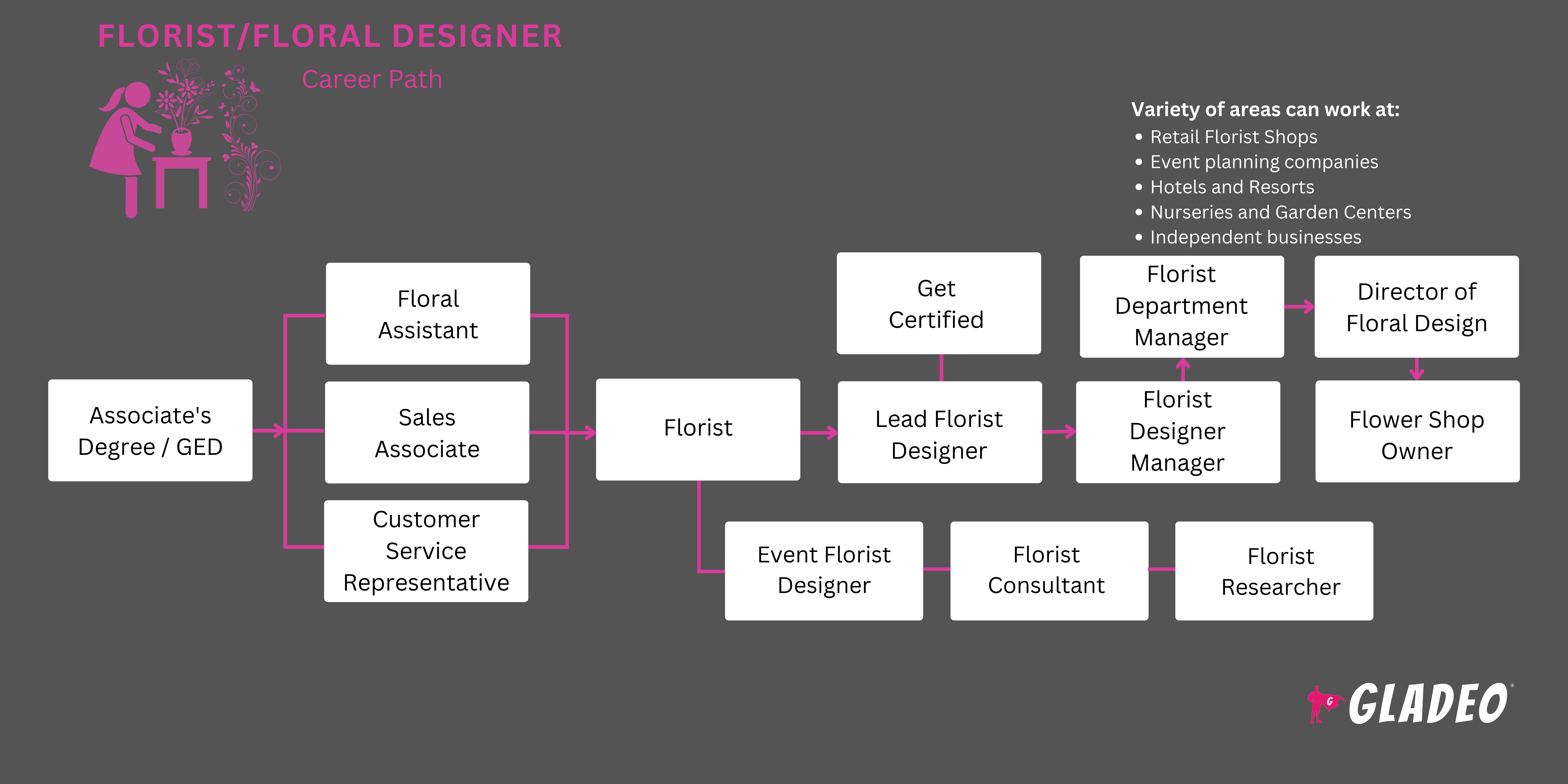
- Maghanap ng mga job posting sa Indeed.com pati na rin ng mga lokal na listahan sa Craigslist
- Call local florists, nurseries, and grocery or retail stores to see if they’re hiring or have any projected openings in the near future
- Attend farmer's markets and get to know local growers. They may know of job openings
- Take florist-related classes and get acquainted with your fellow students. Grow your network and let them know when you’re looking for work
- If attending an AIFD-approved school, talk to an advisor about help with resume writing, interview preparation, or job searching
- Isipin kung sino ang gusto mong ilista bilang iyong mga personal na sanggunian, at humingi ng pahintulot sa kanila na ibahagi ang kanilang impormasyon sa pakikipag-ugnayan.
- Kung wala kang degree sa kolehiyo, isaalang-alang ang pagkuha ng mga klase at pagkuha ng sertipiko, associate's degree, o bachelor's degree.
- Alamin ang lahat ng proseso sa likod ng iyong trabaho. Ipaalam sa iyong superbisor na handa kang magsimulang gumawa ng mga karagdagang gawain. Gawing napakahalaga ang iyong sarili!
- Ask if there are particular specialized skills you should learn that could benefit the business. Let them know you are willing to do the training and ask if they can offer tuition assistance
- Show up to work on time and take good care of the flowers and plants under your care
- Always offer outstanding customer service and pay close attention to the little details
- Closely monitor flowers and plants for signs of disease, pests, or malnourishment
- Makipagtulungan nang maayos sa iba at sanayin ang mga bagong empleyado sa mataas na pamantayan
- Palaging magsagawa ng mahusay na mga pamamaraan sa kaligtasan at magsuot ng guwantes o proteksyon sa mata, kung kinakailangan
- Stay up to date on trends and continue to learn about new designs and ideas
- Engage with professional floral organizations. Attend meetings, workshops, and other events to discover new things and make connections
- Bumuo ng matibay na ugnayan sa mga nagtitinda tulad ng mga wholesaler at supplier
- Consider opening your own business or applying to larger employers that may offer higher salaries or better promotion opportunities
Mga Website
- 1-800-Flowers
- American Institute of Floral Designers
- American School of Flower Design
- Arena Flowers
- Ashworth College
- Benchmark Bouquets
- Bloom Generation
- BloomNation
- BloomsyBox
- Bouqs
- eFlorist
- Farmgirl Flowers
- Floom
- Floral Design Institute
- FloraLink
- FTD
- Gardenias Floral Design
- Global Rose
- Jenn’s Sticks and Stems
- List of AIFD-approved schools
- Nectar
- New York Institute of Art+Design
- Penn Foster Career School
- ProFlowers
- Scotts Flowers
- Society of American Florists
- State Floral Association education providers
- Table & Tulip
- The Floral Society
- The Unlikely Florist
- UrbanStems
- Young Flowers
Mga Libro
- Flower Arranging: A Step-by-Step Guide to Floral Design, by Teresa P. Lanker
- Flower School: A Practical Guide to the Art of Flower Arranging, by Calvert Crary
- French Blooms: Floral Arrangements Inspired by Paris and Beyond, by Sandra Sigman and Victoria Riccardi Kindra Clineff
The floral industry is going through many changes, and the Bureau of Labor Statistics projects a decline in the demand for Florists and Floral Designers over the coming years. There will always be a need for people with these unique creative skills, but if you want to explore related career fields, consider some of the below options:
- Tekniko ng Agrikultura at Agham ng Pagkain
- Agronomosta
- Sining at Pinong Artista
- Ekologo
- Siyentipiko sa Kapaligiran
- Tagaplano ng Kaganapan
- Magsasaka o Rancher
- Disenyo ng Moda
- Disenyador ng Grapiko
- Manggagawa sa Pagpapanatili ng Lupa
- Hortikulturista
- Disenyador ng Panloob
- Tagapag-ayos ng hardin
- Naturalista
- Tagapangasiwa ng Pestisidyo
- Biyologo ng Halaman
- Siyentipiko ng Lupa
- Tagapamahala ng Ubasan
Balita

Mga Itinatampok na Trabaho
Mga Online na Kurso at Kagamitan
Mga Inaasahang Taunang Sweldo
New workers start around $38K. Median pay is $46K per year. Highly experienced workers can earn around $49K.
Mga Inaasahang Taunang Sweldo
New workers start around $40K. Median pay is $48K per year. Highly experienced workers can earn around $53K.
Mga Inaasahang Taunang Sweldo
New workers start around $36K. Median pay is $43K per year. Highly experienced workers can earn around $46K.
Mga Inaasahang Taunang Sweldo
New workers start around $41K. Median pay is $47K per year. Highly experienced workers can earn around $55K.
Mga Inaasahang Taunang Sweldo
New workers start around $37K. Median pay is $44K per year. Highly experienced workers can earn around $52K.