





Mga Spotlight
Tagadisenyo ng Eksibit, Tagadisenyo ng Booth ng Trade Show, Tagadisenyo ng Espasyo para sa Kaganapan, Tagadisenyo ng Karanasan, Tagadisenyo ng Display, Tagadisenyo ng Eksibit sa Museo
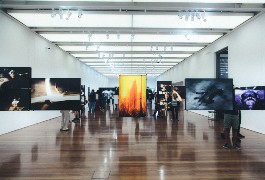
Ang mga Disenyador ng Eksibisyon at Trade Show ay lumilikha ng mga biswal na espasyo na nararanasan ng mga tao sa mga kombensiyon, expo, museo, trade show, at mga promosyonal na kaganapan. Nagdidisenyo sila ng mga booth, display, interactive exhibit, at mga branded na kapaligiran na tumutulong sa mga kumpanya na makaakit ng atensyon at maipabatid ang mga ideya sa malikhain at di-malilimutang paraan.
Pinagsasama ng mga taga-disenyong ito ang sining, marketing, arkitektura, at paglutas ng problema upang gawing nakakaengganyong karanasan ang mga bakanteng espasyo. Maaaring kailanganin ng isang trade show booth na ipakita ang mga produkto ng isang kumpanya, ikuwento ang isang brand, at hikayatin ang mga bisita na makipag-ugnayan sa mga display—lahat sa loob ng limitadong espasyo at oras.
Ang mga Disenyador ng Eksibisyon at Trade Show ay kadalasang malapit na nakikipagtulungan sa mga kliyente, tagaplano ng kaganapan, mga pangkat sa marketing, mga tagagawa, at mga tauhan ng produksyon. Ang isang proyekto ay maaaring may kinalaman sa pagdidisenyo ng isang eleganteng booth ng teknolohiya para sa isang malaking kombensiyon, habang ang isa naman ay maaaring tumuon sa paglikha ng isang eksibit sa museo na may mga pang-edukasyong display at mga interactive na tampok.
- Pagdidisenyo ng mga nakaka-engganyong espasyo na maaaring tahakin at maranasan mismo ng mga tao
- Makita ang iyong eksibit o booth na nakadispley sa mga kombensiyon, expo, museo, o mga pangunahing kaganapan
- Pinagsasama ang pagkamalikhain sa arkitektura, branding, at produksyon ng kaganapan
- Paggawa sa iba't ibang uri ng proyekto sa halip na ulitin ang parehong mga disenyo araw-araw
- Pakikipagtulungan sa mga malikhaing propesyonal tulad ng mga marketer, fabricator, eksperto sa pag-iilaw, at mga event team
- Pagtulong sa mga brand na makaakit ng mga customer at mamukod-tangi sa mga mapagkumpitensyang espasyo para sa mga kaganapan
- Paggamit ng teknolohiya, ilaw, grapiko, at mga interactive na display upang lumikha ng mga di-malilimutang karanasan
- Ang pagkakaroon ng mga pagkakataong magtrabaho sa mga pambansa o internasyonal na eksibisyon at mga trade show
Iskedyul ng Paggawa
Ang mga Disenyador ng Eksibisyon at Trade Show ay karaniwang nagtatrabaho nang full-time para sa mga kompanya ng disenyo, mga kompanya ng kaganapan, mga museo, mga ahensya ng marketing, o mga negosyo sa produksyon ng eksibit. Ang mga oras ay karaniwang regular na oras ng opisina, ngunit ang mga deadline bago ang mga pangunahing kaganapan ay maaaring mangailangan ng trabaho sa gabi o katapusan ng linggo.
Karaniwan ang paglalakbay dahil madalas bumibisita ang mga designer sa mga lugar ng kaganapan, mga convention center, mga trade show, o mga lokasyon ng kliyente. Ang ilang mga propesyonal ay nagtatrabaho rin bilang freelance o nakabatay sa kontrata sa mga pansamantalang proyekto ng eksibit.
Karaniwang mga Tungkulin
- Magdisenyo ng mga booth, exhibit, at mga espasyo para sa mga trade show batay sa mga layunin ng kliyente
- Gumawa ng mga sketch, digital rendering, at 3D model ng mga layout ng exhibit
- Pumili ng mga kulay, ilaw, signage, sahig, at mga materyales sa pagpapakita
- Makipagtulungan sa mga pangkat ng marketing upang maipabatid ang pagkakakilanlan ng tatak sa pamamagitan ng mga eksibit
- Gumawa ng mga plano sa sahig at layout ng espasyo para sa mga kaganapan o kombensiyon
Ipakita ang mga konsepto ng disenyo sa mga kliyente at baguhin ang mga disenyo batay sa feedback - Makipag-ugnayan sa mga tagagawa at mga pangkat ng produksyon habang ginagawa ang eksibit
- Magsaliksik ng mga bagong materyales, teknolohiya, at mga trend sa pagpapakita para sa mga proyekto sa hinaharap
- Maghanda ng mga teknikal na guhit at mga tagubilin sa pag-install para sa mga setup crew
- Tiyaking natutugunan ng mga disenyo ng eksibit ang mga regulasyon sa kaligtasan at mga kinakailangan sa lugar
Mga Karagdagang Responsibilidad
- Pagbisita sa mga lugar ng kaganapan upang sukatin ang mga espasyo at siyasatin ang mga instalasyon
- Pamamahala ng mga takdang panahon ng proyekto at mga iskedyul ng produksyon
- Paggawa ng mga badyet para sa mga materyales at konstruksyon ng eksibit
- Nangangasiwa sa pag-aayos at pagtanggal ng eksibit habang nagaganap ang mga kaganapan
- Pagsubok sa mga interactive na display, mga sistema ng ilaw, o mga tampok ng multimedia
- Pakikipag-ugnayan sa mga vendor, printer, at supplier ng kagamitan
- Pagpapanatili ng mga digital na file, rendering, at mga archive ng proyekto
- Pagtulong sa pag-troubleshoot ng mga isyu sa pag-install bago magbukas ang mga kaganapan sa publiko
Ang isang karaniwang araw ay maaaring magsimula sa pagrerepaso ng mga timeline ng proyekto, mga email ng kliyente, at mga konsepto ng eksibit. Kadalasang ginugugol ng mga taga-disenyo ang mga umaga sa pag-sketch ng mga layout, pagbuo ng mga 3D rendering, o pagpili ng mga materyales para sa mga paparating na trade show at mga kaganapan.
Sa mga pagpupulong, nakikipagtulungan sila sa mga kliyente at mga pangkat ng marketing upang matiyak na ang eksibit ay sumasalamin sa mga layunin at branding ng kumpanya. May mga araw na kinabibilangan ng pagbisita sa mga fabrication shop o mga lugar ng kaganapan upang siyasatin ang konstruksyon ng booth at matiyak na maayos ang lahat ng progreso.
Habang papalapit ang mga deadline ng kaganapan, bumibilis din ang takbo ng mga kaganapan. Maaaring pangasiwaan ng mga taga-disenyo ang mga instalasyon, lutasin ang mga hindi inaasahang problema sa pag-setup, o gumawa ng mga huling-minutong pagsasaayos sa disenyo bago dumating ang mga dadalo.
Ang gawain ay malikhain, kolaboratibo, at lubos na biswal. Ang bawat proyekto ay nag-aalok ng pagkakataong lumikha ng isang kapaligirang nakakakuha ng atensyon at nag-iiwan ng pangmatagalang impresyon.
Mga Malambot na Kasanayan
- Pagkamalikhain
- Komunikasyon
- Organisasyon
- Paglutas ng problema
- Kakayahang umangkop
- Kolaborasyon
- Pansin sa detalye
- Pamamahala ng oras
- Pag-iisip na biswal
- Pamumuno
- Mga kasanayan sa serbisyo sa kliyente
- Paggawa ng maraming bagay (multitasking)
Mga Kasanayang Teknikal
- Software para sa 3D modeling at rendering
- Disenyong tinutulungan ng kompyuter (CAD)
- Pagpaplano ng espasyo at disenyo ng layout
- Mga pangunahing kaalaman sa disenyo ng grapiko
- Disenyo ng ilaw at display
- Kaalaman sa mga materyales at pamamaraan ng paggawa
- Presentasyon at pagbuo ng konsepto
- Mga prinsipyo ng pagba-brand at visual marketing
- Pamamahala ng proyekto
- Pagbabadyet at pag-iiskedyul
- Interpretasyon sa pagguhit ng konstruksyon
- Software para sa digital na presentasyon
- Mga Tagadisenyo ng Corporate Trade Show: Gumawa ng mga branded booth at display para sa mga negosyong dumadalo sa mga kombensiyon at expo.
- Mga Tagadisenyo ng Eksibit sa Museo: Nagdidisenyo ng mga pang-edukasyon at interaktibong eksibit para sa mga museo, sentro ng agham, at mga institusyong pangkultura.
- Mga Experiential Designer: Tumutok sa mga nakaka-engganyong karanasan sa brand gamit ang multimedia, teknolohiya, at interaksyon ng audience.
- Mga Disenyador ng Retail at Display: Bumuo ng mga promotional display at pop-up space para sa mga tindahan at retail brand.
- Mga Freelance na Tagadisenyo ng Eksibit: Makipagtulungan nang nakapag-iisa sa mga kumpanya ng kaganapan, ahensya, o kliyente sa mga takdang-aralin na nakabatay sa proyekto.
- Mga kompanya ng disenyo ng trade show at exhibit
- Mga ahensya sa marketing at advertising
- Mga museo at institusyong pangkultura
- Mga kumpanya ng produksyon ng kaganapan
- Mga departamento ng marketing ng korporasyon
- Mga tagapag-ayos ng kombensiyon at eksibisyon
- Mga kumpanya ng retail at experiential branding
- Mga studio ng arkitektura at interior design
- Mga kompanya ng teknolohiya at multimedia
Ang karerang ito ay nangangailangan ng pagkamalikhain, kakayahang umangkop, at mahusay na kasanayan sa pamamahala ng proyekto. Ang mga taga-disenyo ay kadalasang nagtatrabaho sa ilalim ng mahigpit na mga deadline bago ang malalaking kombensiyon o eksibisyon, kung saan ang mga pagkaantala ay maaaring magastos.
Maaaring magkaroon ng mahahabang oras ng trabaho habang nag-i-install ng eksibit o naghahanda para sa kaganapan. Karaniwan din ang paglalakbay at mga pagbisita sa lugar na nangangailangan ng maraming pisikal na pagsisikap, lalo na kapag nangangasiwa sa mga setup crew o nag-iinspeksyon sa gawaing konstruksyon.
Gayunpaman, maraming propesyonal ang nasisiyahan sa kasabikan na makita ang kanilang mga ideya na maging malawakang pisikal na karanasan na nakakasalamuha ng libu-libong tao sa totoong buhay.
- Ang mga interactive at nakaka-engganyong karanasan sa eksibisyon ay nagiging mas popular
- Ang virtual reality (VR) at augmented reality (AR) ay lalong ginagamit sa mga eksibisyon at trade show.
- Ang mga napapanatiling materyales sa eksibit at mga disenyo ng magagamit muli na booth ay lumalaking prayoridad
- Ang mga digital screen at multimedia display ay pumapalit sa tradisyonal na static signage
- Pinagsasama na ngayon ng mga hybrid na kaganapan ang mga personal na eksibit na may mga virtual na karanasan at livestreaming
- Ang 3D visualization software ay nagbibigay-daan sa mga taga-disenyo na i-preview ang mga eksibit bago magsimula ang konstruksyon
- Pinapataas ng mga kampanya sa experiential marketing ang demand para sa mga malikhaing kapaligiran ng kaganapan
- Ang teknolohiyang walang touch at mga smart display ay nagiging mas karaniwan sa mga pampublikong kaganapan
- Mas namumuhunan ang mga kumpanya sa mga espasyo para sa eksibit na angkop sa social media upang hikayatin ang online sharing.
- Ang mga portable modular exhibit system ay nakakatulong sa mga brand na mabawasan ang mga gastos at oras ng pag-setup
Ang mga indibidwal na naakit sa karera bilang isang Exhibition at Trade Show Designer ay kadalasang nasisiyahan sa mga malikhaing proyekto, pagdedekorasyon ng mga espasyo, at pag-oorganisa ng mga kaganapan mula pa noong bata pa sila. Maaaring nagustuhan nila ang pag-aayos ng mga booth para sa mga school fair, pagdidisenyo ng mga poster o display, paggawa ng mga modelo, o pagtulong sa pagpaplano ng mga party at presentasyon. Marami rin ang naakit sa sining, arkitektura, marketing, o teatro dahil nasisiyahan sila sa paglikha ng mga karanasang nakakakuha ng atensyon ng mga tao. Natuklasan ng ilan na gusto nila ang pagtatrabaho sa mga proyekto ng pangkat, paglutas ng mga hamon sa disenyo, at paggawa ng mga ideya sa mga biswal na kapana-panabik na kapaligiran. Ang kombinasyong ito ng pagkamalikhain, organisasyon, at mga kasanayan sa komunikasyon ay kadalasang humahantong sa kanila patungo sa mga karerang nakatuon sa mga eksibisyon, branding, at disenyo ng kaganapan.
Karaniwang kailangan ng mga Disenyador ng Eksibisyon at Trade Show ng kahit man lang associate's o bachelor's degree sa disenyo ng eksibisyon, interior design, industrial design, graphic design, o kaugnay na larangan. Mas gusto ng maraming employer ang mga kandidatong may karanasan sa paggawa ng mga display, event environment, o branded marketing space. Ang mga disenyador na nagtatrabaho para sa malalaking kumpanya ng trade show, museo, o event production firm ay kadalasang nangangailangan ng matibay na portfolio na nagpapakita ng pagkamalikhain, teknikal na kasanayan, at kaalaman sa spatial design.
Kabilang sa mga karaniwang kurso sa kolehiyo ang:
- Disenyo ng Eksibisyon at Pagpapakita
- Disenyo ng Panloob at Pangkapaligiran
- Disenyong Tinutulungan ng Kompyuter (CAD)
- 3D Modeling at Rendering
- Disenyong Grapiko at Komunikasyong Biswal
- Marketing at Presentasyon ng Tatak
- Pag-iilaw at Pagpaplano ng Espasyo
- Pamamahala ng Proyekto at Produksyon ng Kaganapan
Napakahalaga ng praktikal na karanasan. Maraming Disenyo ng Eksibisyon at Trade Show ang nakakakuha ng karanasan sa pamamagitan ng mga internship sa mga kumpanya ng produksyon ng kaganapan, mga studio ng disenyo, mga museo, o mga organisasyon ng trade show. Ang mga mag-aaral ay kadalasang bumubuo ng mga portfolio sa pamamagitan ng pagdidisenyo ng mga mock exhibit booth, layout ng kaganapan, at mga interactive display. Ang karanasan sa paggamit ng software sa industriya tulad ng AutoCAD, SketchUp, Adobe Creative Suite, at mga 3D rendering tool ay lubhang mahalaga para makapasok sa larangan.
- Kumuha ng mga klase sa sining, disenyo, pagbalangkas, o computer graphics.
- Matuto ng mga software sa disenyo tulad ng AutoCAD, SketchUp, Adobe Creative Suite, o mga programang 3D rendering.
- Sumali sa mga art club, mga pangkat ng disenyo ng entablado sa teatro, o mga organisasyon sa pagpaplano ng kaganapan.
- Magboluntaryo upang tumulong sa pagdisenyo ng mga booth, dekorasyon, o mga display para sa mga perya sa paaralan at mga kaganapan sa komunidad.
- Dumalo sa mga trade show, kombensiyon, museo, o eksibisyon upang pag-aralan ang mga propesyonal na layout at branding ng exhibit.
- Gumawa ng portfolio ng mga sketch, digital na disenyo, layout, at mga konseptong 3D.
- Mag-intern sa mga kompanya ng produksyon ng kaganapan, museo, ahensya sa marketing, o mga kompanya ng disenyo ng eksibit.
- Magsanay ng pagtutulungan at komunikasyon sa pamamagitan ng mga proyektong panggrupo at mga organisasyon ng mga mag-aaral.
- Kumuha ng mga klase sa marketing, arkitektura, interior design, o negosyo upang maunawaan ang mga pangangailangan at branding ng kliyente.
- Manatiling updated sa mga trend sa experiential marketing, interactive technology, at sustainable exhibit design.
- Mga kurso sa disenyo ng eksibisyon, disenyong pang-espasyo, at komunikasyong biswal.
- Pagsasanay sa CAD software, 3D modeling, at mga digital rendering tool.
- Mga praktikal na proyekto sa studio na ginagaya ang mga totoong trade show o gawaing eksibit.
- Mga pagkakataon para sa mga internship sa mga kumpanya ng kaganapan, museo, o mga kumpanya ng disenyo.
- Access sa mga laboratoryo ng fabrikasyon, kagamitan sa paggawa ng modelo, at modernong teknolohiya sa disenyo.
- Mga programang nagbibigay-diin sa pagkamalikhain, branding, at disenyo ng karanasan ng customer.
- Mga instruktor na may mga propesyonal na karanasan sa disenyo ng eksibit, kaganapan, o interior.
- Suporta sa pagbuo ng portfolio upang maghanda para sa mga internship at trabaho.
- Maliliit na klase na nagbibigay-daan para sa personalized na feedback at mentoring.
- Mga pagkakataon sa pakikipag-network sa mga propesyonal sa industriya at mga organisasyon ng kalakalan.
- Mga kursong pinagsasama ang mga kasanayan sa disenyo, pamamahala ng proyekto at kaalaman sa marketing.
- Mga serbisyo sa karera o tulong sa paglalagay ng trabaho pagkatapos ng graduation.
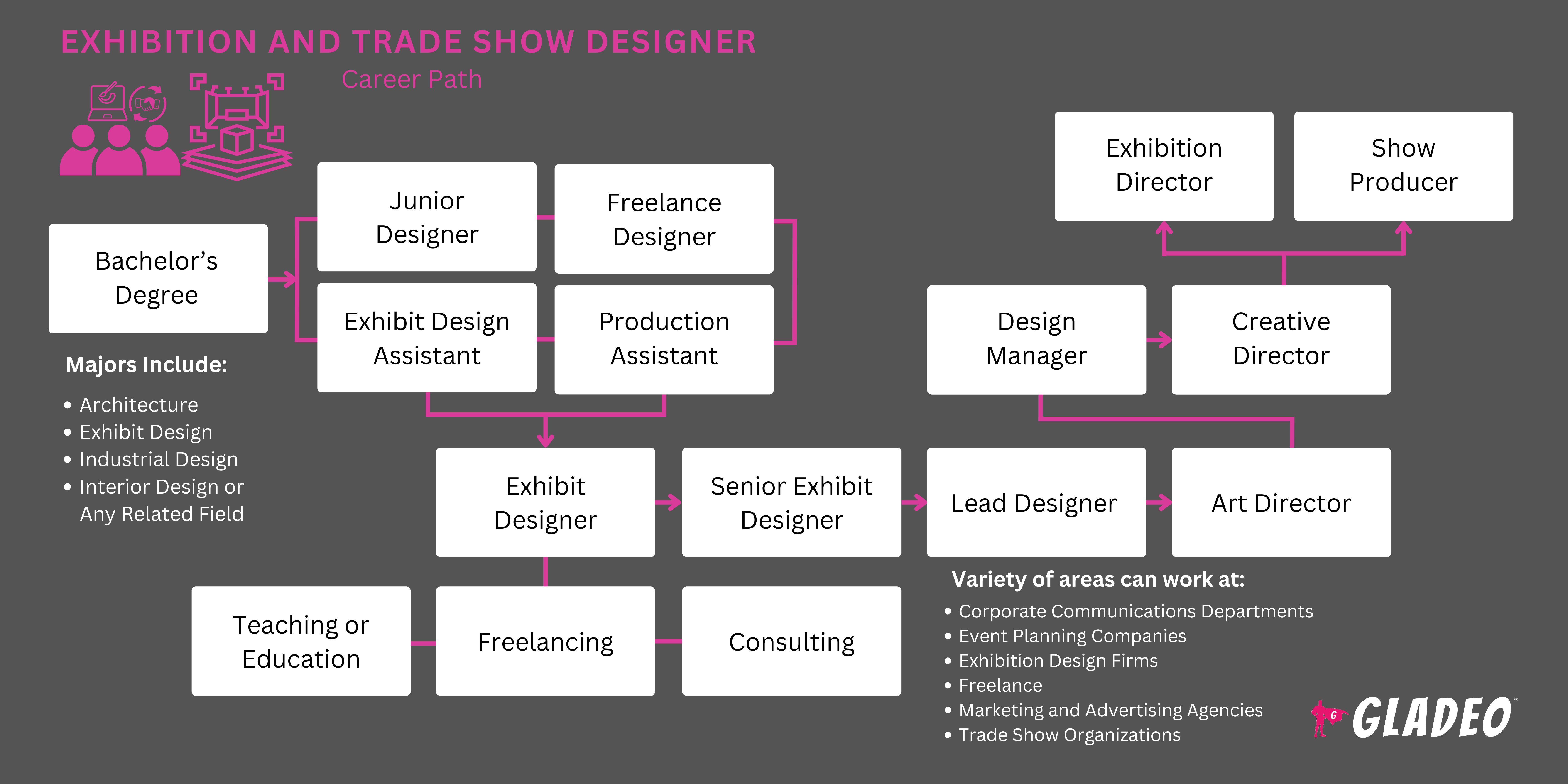
- Mag-apply para sa mga entry-level na posisyon tulad ng junior designer, design assistant, exhibit installer, o production assistant.
- Bumuo ng isang matibay na portfolio na nagpapakita ng mga konsepto, layout, sketch, at 3D renderings ng booth.
- Matuto ng mga software na pamantayan sa industriya tulad ng AutoCAD, SketchUp, Adobe Creative Suite, at mga 3D visualization tool.
- Mag-internship sa mga kompanya ng disenyo ng eksibit, museo, kompanya ng produksyon ng kaganapan, o mga ahensya sa marketing.
- Makipag-network sa mga taga-disenyo, tagaplano ng kaganapan, arkitekto, at mga propesyonal sa trade show.
- Dumalo sa mga eksibisyon, kombensiyon, at mga kaganapan sa industriya ng disenyo upang makagawa ng mga koneksyon at matuto ng mga kasalukuyang uso.
- Itampok sa iyong résumé ang pagtutulungan, pagkamalikhain, at karanasan sa paglutas ng problema.
- Magsanay na ipresenta nang malinaw at may kumpiyansa ang iyong mga ideya sa disenyo sa mga panayam.
- Magpakita ng kakayahang umangkop sa pamamagitan ng pag-aaral tungkol sa graphic design, lighting, fabrication, at event logistics.
- Magpakita ng pagiging maaasahan sa pamamagitan ng pagtupad sa mga deadline at paghawak ng maraming proyekto nang sabay-sabay.
- Magboluntaryo upang tumulong sa mga kaganapan sa paaralan, mga kombensiyon, o mga lokal na eksibisyon upang makakuha ng praktikal na karanasan.
- Manatiling updated sa mga trend sa experiential marketing, mga interactive display, at napapanatiling disenyo.
- Gumamit ng mga design job board, internship, networking platform, at mga referral upang makahanap ng mga oportunidad.
- Panatilihin ang isang propesyonal na website ng portfolio at online presence upang maipakita ang iyong trabaho sa mga employer.
- Alamin ang bawat yugto ng proseso ng disenyo ng eksibit, mula sa mga concept sketch hanggang sa pag-install at pagpapaliwanag.
- Palakasin ang mga teknikal na kasanayan sa CAD software, 3D rendering, disenyo ng ilaw, at mga pamamaraan ng paggawa.
- Kumuha ng mga kurso o sertipikasyon sa pamamahala ng proyekto, produksyon ng kaganapan, o experiential marketing.
- Magpakita ng inisyatiba sa pamamagitan ng pagtanggap sa mga kumplikadong proyekto o matagumpay na pamamahala sa masisikip na mga deadline.
- Bumuo ng matibay na ugnayan sa mga kliyente, kontratista, tagagawa, at tagaplano ng kaganapan.
- Lumipat sa mas malalaking kompanya ng disenyo, museo, o mga internasyonal na kompanya ng trade show para sa mas malalaking proyekto at responsibilidad.
- Magboluntaryo para sa mga kilalang kaganapan, kombensiyon, o mga espesyal na eksibit upang mapalawak ang iyong portfolio.
- Paunlarin ang mga kasanayan sa pagbabadyet at pag-iiskedyul sa pamamagitan ng pagtulong sa pamamahala ng mga takdang panahon ng produksyon at mga gastos sa proyekto.
- Pagbutihin ang mga kakayahan sa pamumuno sa pamamagitan ng paggabay sa mga junior designer o pag-coordinate ng mga design team.
- Manatiling napapanahon sa mga uso sa interactive na teknolohiya, pagpapanatili, at mga nakaka-engganyong karanasan sa brand.
- Humingi ng gabay mula sa mga bihasang taga-disenyo ng eksibisyon, mga malikhaing direktor, o mga prodyuser ng kaganapan.
- Tumanggap ng mga tungkuling superbisor tulad ng senior designer, project manager, o creative lead.
Mga Website:
- Pandaigdigang Asosasyon ng mga Eksibisyon at Kaganapan (IAEE)
- Online na Tagapagtanghal
- Tagapagbenta ng Kaganapan
- Samahan para sa Disenyong Grapikong Pangkaranasan (SEGD)
- Network ng Balita sa Palabas ng Kalakalan (TSNN)
- Balita sa Lungsod ng Eksibit
- Dexigner
- ArchDaily
- Core77
- Behance
- AIGA – Ang Propesyonal na Asosasyon para sa Disenyo
- Dezeen
- Balita sa Industriya ng Kaganapan
Mga Libro:
- Pagdidisenyo ng mga Eksibisyon ni Sarah Anne Higgins
- Disenyo ng Eksibit ni David Heras
- Ang Sining ng Palabas ni Jeffrey Gitomer
- Mga Prinsipyo ng Disenyo na Unibersal nina William Lidwell, Kritina Holden, at Jill Butler
- Huwag Mo Akong Paisipin ni Steve Krug
Kung ang pagiging isang Exhibition at Trade Show Designer ay hindi angkop para sa iyo, ang mga kaugnay na karera ay kinabibilangan ng:
- Disenyador ng Panloob
- Tagaplano ng Kaganapan
- Tagadisenyo ng Eksibit ng Museo
- Tagadisenyo ng Display ng Tingian
- Tagadisenyo ng Set at Stage
- Disenyador ng Industriya
- Tagapangasiwa ng Eksperiyensiyal na Marketing
- Disenyador ng Grapiko
- Tagabalangkas ng Arkitektura
- Direktor ng Malikhaing
Balita

Mga Itinatampok na Trabaho
Mga Online na Kurso at Kagamitan
Mga Inaasahang Taunang Sweldo
Ang mga bagong manggagawa ay nagsisimula sa humigit-kumulang $73K. Ang median na suweldo ay $99K bawat taon. Ang mga manggagawang may mataas na karanasan ay maaaring kumita ng humigit-kumulang $133K.